For sites or applications targeting users in South Korea and East Asia, Alibaba Cloud Korea server rentals offer lower network latency and compliance convenience. This article presents a complete process from a newcomer's perspective to guide you from selecting the model, purchasing, activating to network and security configurations, helping you quickly deploy and prepare for the launch of Alibaba Cloud Korea servers.
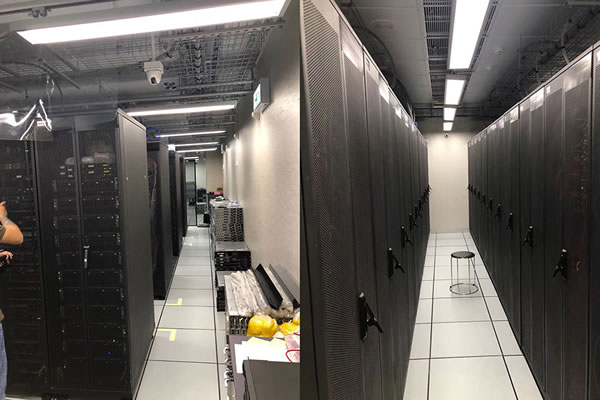
Before renting a Korean server on Alibaba Cloud, make sure your Alibaba Cloud account has completed real-name authentication and has international purchase privileges. Enterprise users must submit their business qualifications, while individual users must follow platform instructions to upload identification documents to ensure smooth selection of cloud products for overseas regions and subsequent payment and invoicing processes.
Alibaba Cloud offers various instance types, commonly ECS and lightweight application servers. Assess CPU, memory, and bandwidth configurations for traffic, concurrency, and storage needs. When selecting the South Korea region, prioritize the distribution of target users and latency requirements, and develop a selection plan based on available mirroring and snapshot strategies.
Instance specifications should be chosen based on business load and budget balance, with bandwidth options available as fixed bandwidth or pay-as-you-go. To ensure stable access, it is recommended to set appropriate public network bandwidth and enable elastic public IPs, while reserving some bandwidth margin to handle access peaks and sudden traffic.
On the console, select the region as Korea, choose the appropriate image (Linux/Windows), specifications, and disk type, and set the administrator password or key pair. After confirming the billing method and submitting the order and completing payment, the system will generate instance information and initial login credentials after activation, recording the relevant ID for management.
Create VPCs and subnets to achieve private network isolation, set routing and NAT rules to ensure outbound access. When configuring security groups, the principle of minimum port openness is common: only 22/3389 and 80/443 are allowed. Later, specific ports are allowed according to application needs, and protection is strengthened by combining firewall and access control policies.
After logging into the instance for the first time, perform system updates, install common tools, and configure time zones and languages. Create a non-root administrator account and configure sudo privileges, disable password login or restrict SSH keys to reduce exposure risk. At the same time, patches and system logs are regularly updated.
Resembling the domain name to the instance's elastic public IP or load balancing address, configuring A/AAAA records and setting reasonable TTL. To ensure data transmission security, it is recommended to apply for and deploy SSL/TLS certificates, using CA certificates or hosting services, one-click deployment to web servers, and enabling strong encryption suites.
As business grows, it is recommended to adopt load balancing distribution traffic in the South Korean region combined with multi-availability zone deployment to improve availability. By using backend health checks to automatically exclude abnormal instances and combining automatic scaling strategies with scaling strategies for on-demand expansion, stable service is maintained even amid traffic fluctuations.
Regular snapshots and data backups are essential strategies; configure an automatic snapshot policy and back up important data off-site to prevent disaster recovery. Enable cloud monitoring and alerts, set threshold alerts for CPU, memory, disk, and network, and combine logging services for centralized auditing and performance analysis.
For the Korean market, pay attention to local laws and content compliance requirements, and follow data protection and filing regulations. To optimize access speed, CDN can be combined to accelerate static resources, GZIP compression and caching strategies are used to reduce bandwidth consumption, and access path optimization is monitored.
Alibaba Cloud Korea server rental and configuration involve multiple stages: selection, networking, security, domain name, and operations. Newcomers should follow steps to complete account and real-name authentication, reasonably select instances and bandwidth, minimize secure openness, and deploy monitoring and backup. Enable load balancing and CDN on demand, continuously optimize performance and compliance, effectively reducing launch risks and enhancing user experience.
- Latest articles
- In-depth Analysis: Is Alibaba Cloud Hong Kong A Native IP? Bandwidth Optimization Recommendations For Cross-border E-commerce
- Recommended Types And Bandwidth Solutions For Hong Kong Server Clusters Under High-concurrency Applications
- Why Choose VPS For Cross-Border E-commerce Expansion In Korea, Japan, And Hong Kong 3 Practical Traffic Allocation And Optimization
- Key Points For Compliance And Billing Management When Purchasing SK Native IPs In Korea During Enterprise-level Operations
- Methods For Evaluating Data Center Expansion And Resilience When Choosing A Hong Kong Server Hosting Lease
- Analysis From The Perspective Of Filing And Compliance: Which Malaysian VPS Is The Best To Use And Easier To Pass The Review?
- A Comprehensive Analysis Of Which Servers Japanese Users Live On, Including Community Density And Active Periods On The Japanese Server
- Before Purchasing, Compare The Security Measures And Certification Qualifications Of Tencent Cloud Hong Kong Server Proxies
- How To Achieve High Availability And Cost Control In German Server Hosting Through A Hybrid Architecture
- How To Choose Cost-effective Taiwan Cloud Servers And Cloud Hosting With A Limited Budget And Money-saving Tips
- Popular tags
-
Tencent Cloud Korean Server Usage Experience And Evaluation
this article will discuss the usage experience and evaluation of tencent cloud korean servers to help users make wise choices. -

Summary Of User Feedback, Case Analysis Of Long-term Stability And Bandwidth Guarantee Of Korean Vps Purchasing
an analysis of the long-term stability and bandwidth guarantee case of korean vps purchasing based on user feedback, covering sample sources, downtime and recovery, bandwidth performance, purchasing service quality and compliance suggestions, making it easy for enterprises and individuals to make selections. -

From A Developer's Perspective: Which Korean Cloud Server Provider Offers The Best Network Performance And Stability?
From a developer's perspective, this article systematically explains how to evaluate the network performance and stability of Korean cloud server providers. It includes key indicators, testing methods, and selection recommendations to help technical teams make informed decisions.